New Condo Financing Rules in 2026: What Littleton Buyers Need to Know About Project Review

Bryan Messick
Published October 8, 2026
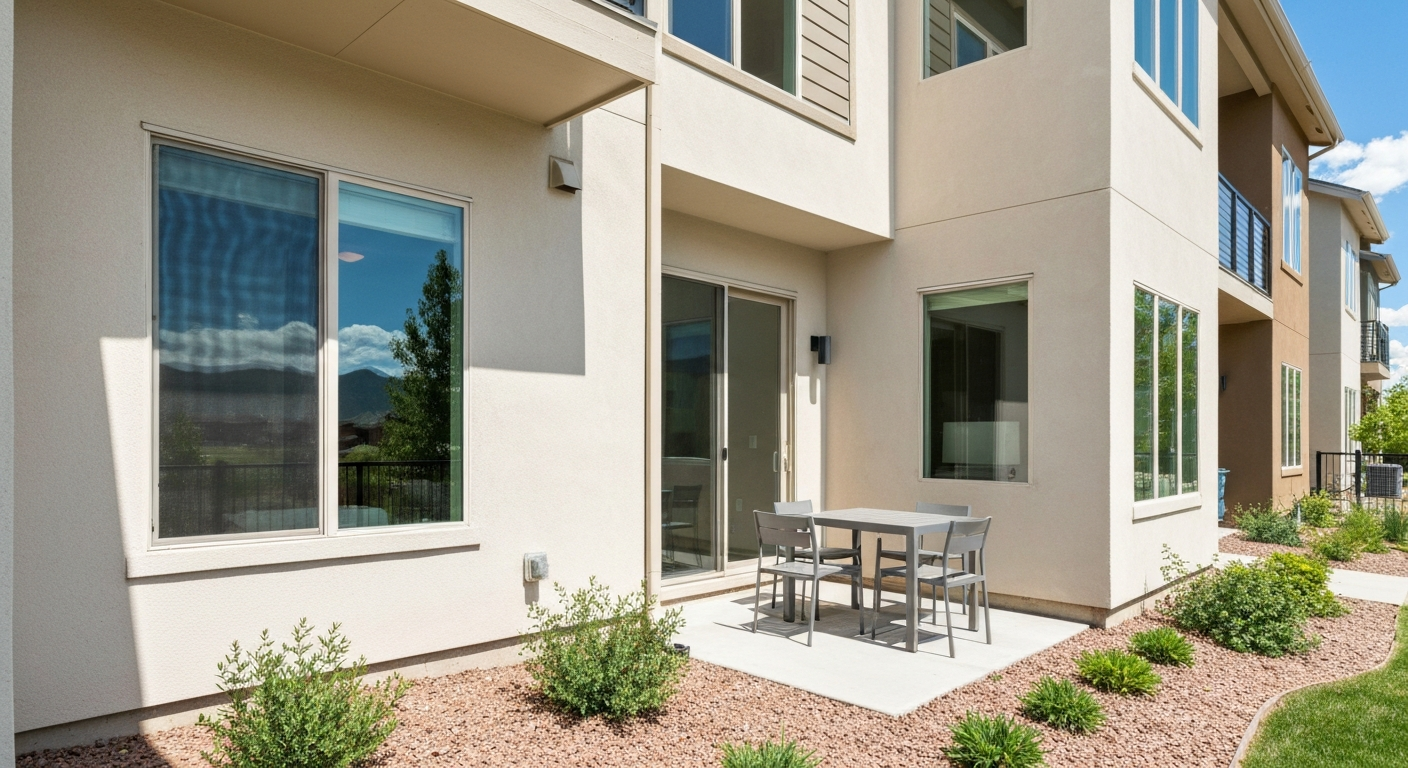
Financing a Condo? Your Lender Now Reviews the Whole Association
Conventional condo financing now requires a project review that evaluates the financial health and physical condition of the entire HOA — not just the unit you are buying. Here is what that review covers, what your HOA must provide, and how it changes your timeline in Littleton.
If you are house-hunting among the condos and townhomes for sale in Littleton, the financing step works differently than it does for a single-family home. With a conventional loan, your lender does not just underwrite you — it also underwrites the entire condo association. That process is called a condo project review, and the review standards have tightened. Here is what every Littleton condo and townhome buyer needs to know before making an offer.
Context for the numbers below: September 2026 REcolorado MLS data shows attached homes (condos and townhomes) in Littleton at a $410,000 median sold price, a median of 46 days in the MLS, and roughly 5.6 months of supply — meaningfully more inventory than the detached market's 2.7 months. That gives condo buyers more room to negotiate, but the financing review is the step most likely to add time or complicate a deal.
What Is a Condo Project Review?
A condo project review is the due diligence a lender performs to confirm that a condominium project meets the eligibility standards set by Fannie Mae and Freddie Mac — the two government-sponsored enterprises that back most conventional mortgages. When a condo meets those standards, it is considered warrantable, and a conventional loan can close on a unit inside it.
The review looks at the project, not just the unit you are buying. That is the key difference from single-family financing: your loan depends partly on the financial and physical health of the entire association.
What the Review Evaluates
- Owner-occupancy ratio — the percentage of units occupied by owners versus renters. Conventional guidelines typically require a healthy owner-occupancy level.
- Reserve fund adequacy — whether the HOA holds enough in reserves to cover future major repairs (roof, siding, paving) without relying on special assessments.
- Commercial / non-residential space — the amount of the project dedicated to commercial use, which is limited under conventional guidelines.
- Single-entity ownership — whether any one owner controls too many units, which concentrates risk.
- Insurance coverage — whether the master policy and property condition meet lender requirements.
- Pending litigation and special assessments — ongoing lawsuits or planned large special assessments that could affect unit owners financially.
What Your HOA Must Provide
To run the review, the lender needs the HOA to complete a condo questionnaire — sometimes called an HOA certification or project questionnaire. This document asks the association to certify the owner-occupancy ratio, confirm reserve balances, disclose any pending litigation, list special assessments, and describe insurance coverage.
The HOA typically charges a fee to complete the questionnaire — usually between $100 and $300. In Littleton transactions, this cost is commonly paid by the buyer or negotiated as a seller concession, similar to an HOA transfer fee.
The HOA questionnaire can take anywhere from a few days to several weeks, depending on whether the association is professionally managed or self-managed. Plan for the longer end in smaller or self-managed communities common across older Littleton complexes.
In addition to the questionnaire, some lenders request supporting documents: the HOA budget, a reserve study (an engineering analysis projecting major repair costs), and the master insurance policy declarations to verify coverage limits. The more organized the HOA, the faster the review moves.
Reserve Studies and Why They Matter Now
A reserve study is a long-term capital plan that forecasts when major components (roofs, siding, elevators, paving) will need replacement and how much the HOA should set aside to pay for them. Lenders increasingly scrutinize reserve adequacy — partly a response to national events that highlighted the risk of underfunded associations.
If an HOA's reserves are too low, the lender may require the association to fund a reserve study, increase dues, or impose a special assessment before the loan can close. For buyers, this means the reserve question is not just a formality — it can determine whether your financing goes through.
Watch for These Red Flags
- • Low reserves relative to the project's age and deferred maintenance schedule
- • Recent or planned special assessments that could add thousands to your ownership costs
- • Pending litigation involving the HOA, which can pause financing
- • High investor concentration (many units owned by one entity or rented out)
- • Deferred maintenance on structural, mechanical, or building-envelope components
Conventional vs. FHA & VA Condo Approval
The conventional project review is not the same as FHA or VA condo approval, and the distinction matters for which loan you can use.
Lender runs a project review at the time of purchase. The project does not need to be on a pre-approved list, but it must meet Fannie/Freddie warrantability standards. Can be full, limited, or streamlined depending on the project.
The entire condo project must appear on HUD's FHA-approved condo list. If the project is not approved, an FHA loan cannot close there unless the association goes through the approval process — which can take months.
The project must be on the VA's approved condo list for a VA loan to close. VA approval has its own requirements. Like FHA, if the project is not listed, the VA loan is off the table until approval is obtained.
The practical takeaway: a condo that is not on the FHA or VA approved list can still be financed conventionally if it passes the project review. But if you specifically need an FHA (3.5% down) or VA (zero down) loan, confirm the project is approved before you fall in love with a unit.
How This Changes Your Timeline
A condo project review can add one to three weeks to your loan timeline, depending on the review type and how fast the HOA responds. Here is how to plan around it as a Littleton buyer:
Start the Review Early
Ask your lender to order the condo questionnaire as soon as you are under contract — or even before, if you are serious about a specific complex. The HOA turnaround is the most common bottleneck, and starting early can keep your closing date on track.
Confirm the Review Type
Established projects with a prior review on file may qualify for a limited or streamlined review, which is faster. New or small projects often need a full review. Your lender confirms which path applies and what documentation is needed.
Build in Contingency Time
If you are buying a condo in a self-managed or smaller association common in older Littleton neighborhoods, budget extra time for the HOA to respond. A 30-day closing may be tight; 45 days is safer for condo purchases unless the project review is already complete.
Do These Rules Apply to Townhomes?
Often, no — but it depends on legal structure. In a true townhome, you typically own the structure and the land beneath it, and many townhome projects do not require a full condo project review. However, some attached homes are legally structured as condominiums even though they look and feel like townhomes. Your lender determines which category your property falls under, and that determines whether the review applies. When in doubt, ask your lender to confirm before you waive financing contingencies.
Why This Matters in Littleton Right Now
Condos and townhomes are roughly a third of Littleton's active inventory, with a September 2026 attached median of $410,000 — a meaningful discount to the detached median of $725,000. That makes attached homes the most common entry point for first-time buyers and downsizers. But the tighter financing review means the lowest-price unit is not always the easiest to close. A complex with strong reserves and clean litigation history is worth more than a cheaper unit in an association that may not pass review.
If you are comparing condos and townhomes across Littleton, Highlands Ranch, or the Southglenn area, bring your lender into the conversation early. I can help you identify which complexes tend to finance cleanly and which ones have a history of financing friction — so you do not waste weeks under contract on a unit that cannot close on your loan type.
More on Condos & Townhomes in Littleton
- This Week's Denver Builder Incentives & Rate BuydownsTownhome and single-family new-construction communities with builder-paid rate buydowns and closing-cost credits.
- Fall 2026 Home Sellers Guide for LittletonHow detached and attached segments carry different months of supply — and what that means for your fall listing timing.
- Colorado Teacher & School Employee Down Payment AssistanceHow the CHFA Schools to Home program applies to condos, townhomes, and approved condominium units.

Buying a Condo in Littleton? Get the Financing Right Before You Offer
Bryan Messick helps Littleton condo and townhome buyers identify financeable complexes, connect with condo-experienced lenders, and build a timeline that accounts for the project review so your closing does not stall on financing.
Your Next Step
Get Pre-Approved & Find Your Littleton Home — no pressure, no obligation. I'll personally review your situation and get back to you within one business day.
Free Littleton Buyer's Guide
Download the 2026 Buyer's Guide — neighborhoods, financing, and what $500K–$1M buys in Littleton right now.
Get the Free GuideI'll send your guide right away and follow up in about a week to see if you have questions. No spam — just real help from a local REALTOR®.
Related Articles
More insights on Littleton real estate & local market trends
 Market Updates
Resetting ARMs & Falling Denver Condo Prices: What Homeowners Must Know in 2026
According to Intercontinental Exchange and the Wall Street Journal, 186,000 adjustable-rate mortgages readjust next year with a median jump of $645 to $1,269 per month. In Metro Denver, where condo and townhome prices have cooled and inventory has climbed, resetting ARMs and expiring builder buydowns pose a unique challenge. Here is how to evaluate your loan caps, assess your equity, and protect your budget.
 Market Updates
Denver New-Home Builder Incentives — Week of October 31, 2026
Tri Pointe Homes has the strongest package in Metro Denver this week: a year-one rate as low as 3.99% plus up to $40,000 in closing or design credit. Brookfield Residential has the lowest headline rate at 3.49%. Here is what each builder is offering, ranked the way that matters to your monthly payment.
 Things To Do
Still Looking for Fall Colors? 7 Beautiful Places Near Littleton and Denver This Weekend
Your late-October 2026 guide to golden cottonwoods, colorful foothills, and scenic fall walks near Littleton and Denver — seven beautiful places to see fall colors this weekend, October 23–25, 2026.
About Bryan Messick
Bryan Messick is a local real estate expert based in Littleton, serving clients throughout the Denver area. With a focus on education and modern technology, Bryan helps clients make confident decisions in any market.
Learn More About Bryan Messick